
Back in my day, a blowout wasn’t just an inconvenience—it could mean a ruined load, a missed delivery, or worse, someone hurt. Tires carry the weight of your truck, your trailer, and your paycheck. Properly inflated, inspected tires mean:
Fuel savings – underinflated tires burn more diesel, and no one can afford wasted fuel today.
Better safety – fewer blowouts and surprises on the road.
More miles per tire – proper pressure and early detection of wear keeps your rubber running longer.
I may have hung up my keys a few years back, but one lesson I’ll preach until the end of my days is this: Take care of your tires, and they’ll take care of you. A rig can have all the horsepower and chrome in the world, but without good rubber under you, you’re just waiting for trouble
Lessons from the road
I’ve seen too many drivers sidelined on the shoulder with a shredded tire, hazards flashing, waiting for a service truck. Nine times out of ten, a simple pressure check at the last stop could’ve kept them rolling.
Your rig’s only as strong as the tires under it. Take five minutes at every break to give them a look, a gauge, and a touch. It’s time you’ll never regret spending.
My routine for tire checks
1. Start every trip with a walk-around
Before rolling, I’d walk my rig and trailer, kicking each tire. No, the “boot test” isn’t scientific, but it tells you if one is dead flat or dangerously low. Then, use a good gauge. Trust me, gauges don’t lie like boots do.
2. Check pressures cold
Always check in the morning, before the day heats them up. Hot tires expand, and you’ll get a false reading. Set them to the manufacturer’s specs, not just “what feels right.”
3. Stop regularly
Every couple of hours, or at fuel stops, I’d step out and put my hands on the tires. Feel for heat, bulges, or soft spots. More than once I found a hot dual ready to fail just by touching it. Saved me a roadside breakdown.
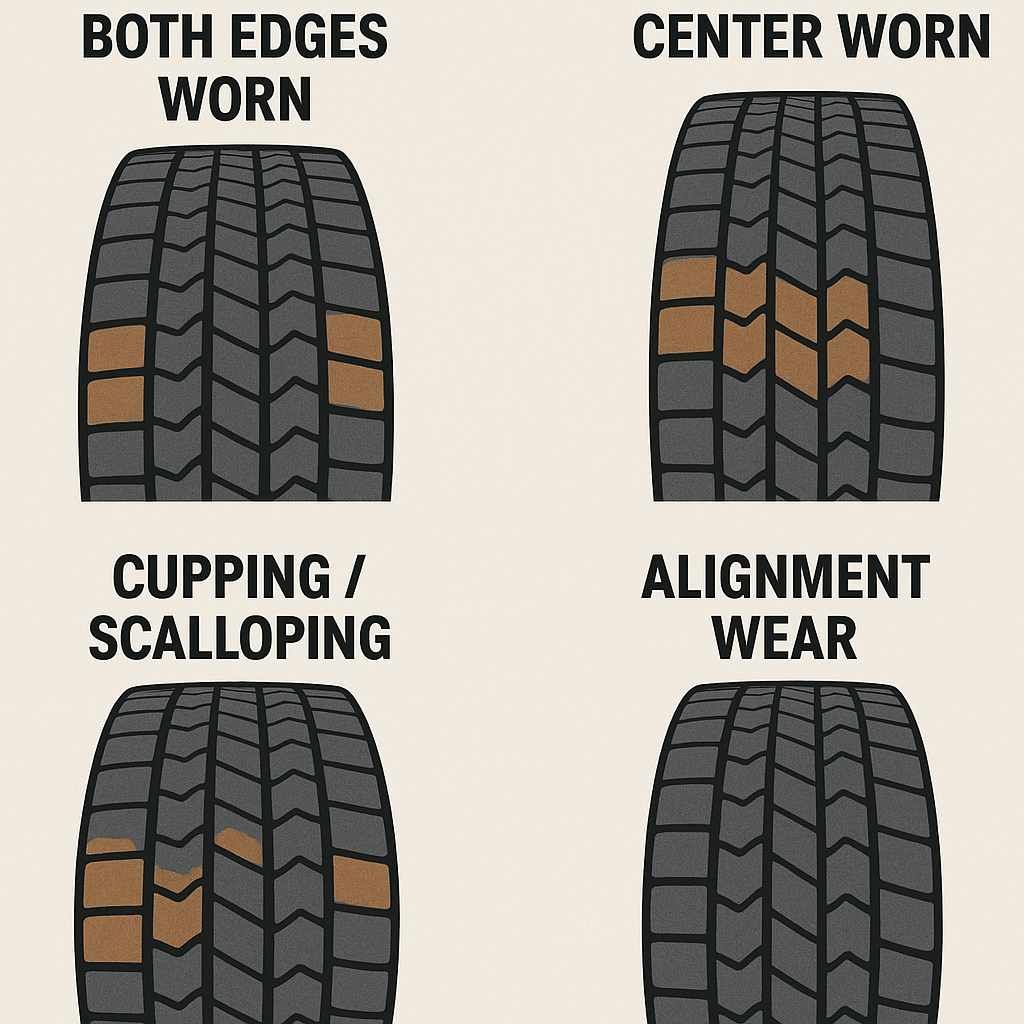
4. Watch tread and wear
Look for uneven patterns:
- Both edges worn → usually underinflation.
- Center worn → overinflation.
- Cupping or scalloping → bad shocks or alignment.
Catch it early, and you can fix the problem before it chews up the whole set.
5. Don’t forget the trailer
Drivers often baby the tractor tires but ignore the trailer. Remember, those trailer tires carry just as much risk, and they’re more likely to be neglected. Check every axle, every time.
Final word on checking tires:
Tires may not be glamorous, but they’re your first line of defense out there. Respect them, and you’ll ride safe, save money, and make it home on time.